
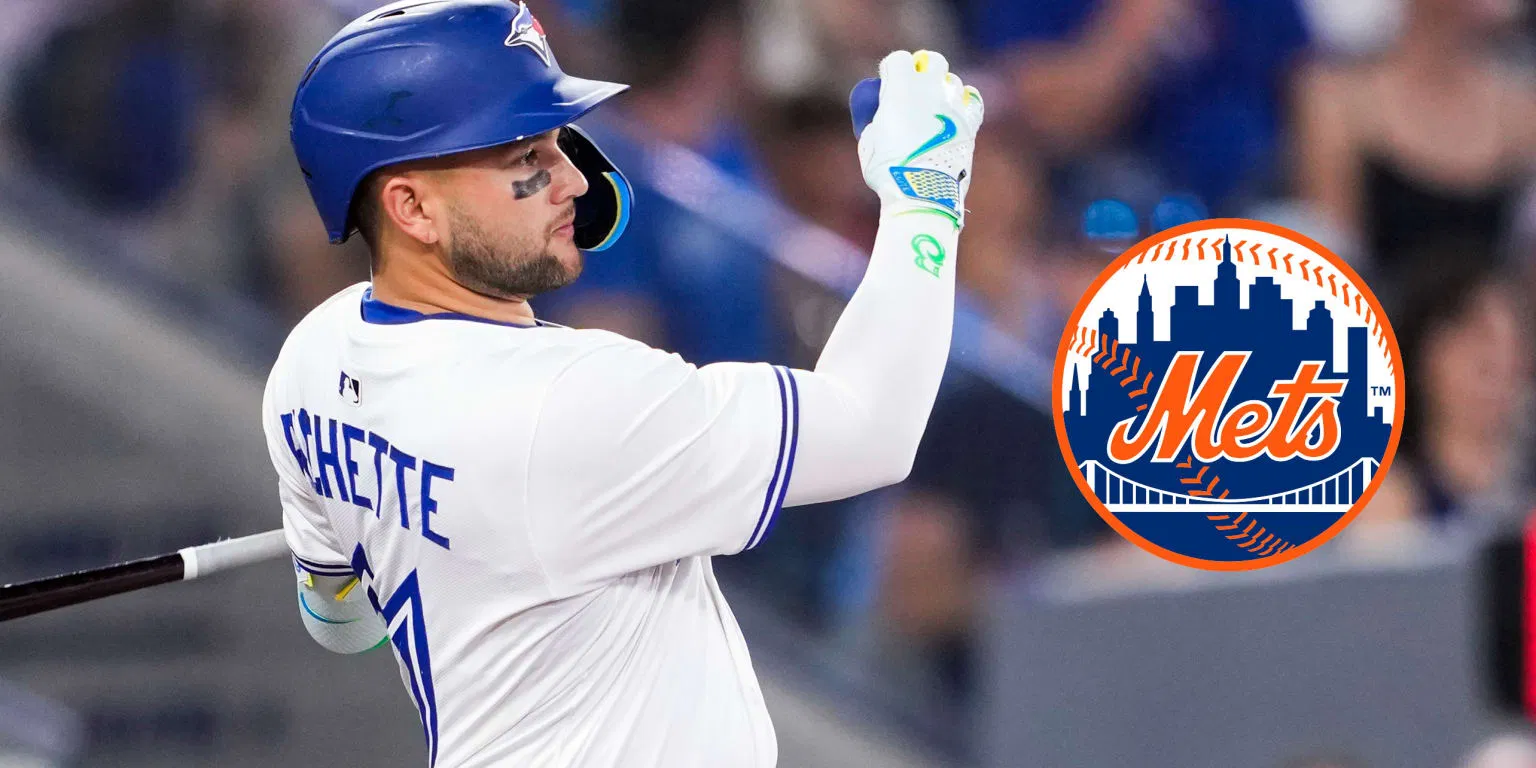
In a stunning pivot after missing out on top free agent Kyle Tucker, the New York Mets have landed one of the most intriguing bats on the market, agreeing to a three-year, $126 million contract with former Toronto Blue Jays shortstop Bo Bichette. The deal, which includes opt-out clauses after each of the first two seasons and a full no-trade provision, represents a massive comeback story for the 27-year-old infielder who just one year ago was coming off the worst season of his career. Bichette's journey from an injury-plagued 2024 where he hit just .225 to a .311 average in 2025 has now been rewarded with one of the richest contracts of the offseason, signaling the Mets' commitment to contending despite losing several key players.
How the Mets Landed Their Newest Star After Missing Out on Tucker
The Mets' pursuit of Bichette unfolded rapidly after their top target, Kyle Tucker, chose to sign a four-year, $240 million contract with the Los Angeles Dodgers late Thursday night. According to sources familiar with the negotiations, the Mets had offered Tucker $220 million over four years, but when he opted for the Dodgers, New York owner Steve Cohen and president of baseball operations David Stearns immediately shifted their attention to Bichette. "The smoke was seen a little later than envisioned," reported MLB.com, referencing Cohen's cryptic "Let me know when you see smoke" tweet that preceded the announcement. Within hours, the Mets had secured their consolation prize—a player many consider to have just as much offensive upside when healthy.
The agreement came together so quickly that Bichette's camp was still fielding offers from other teams, most notably the Philadelphia Phillies, who according to NBC Sports Philadelphia's John Clark had offered "much more guaranteed money over more years." But the Mets' short-term, high-average-annual-value deal appealed to Bichette, giving him the flexibility to re-enter the market as early as next offseason if he performs well. The $42 million average annual value makes this one of the richest contracts for an infielder this winter, and with no deferred money, it represents a straight cash commitment from Cohen's deep pockets.
From Career Low to Career High: The Remarkable Bichette Turnaround
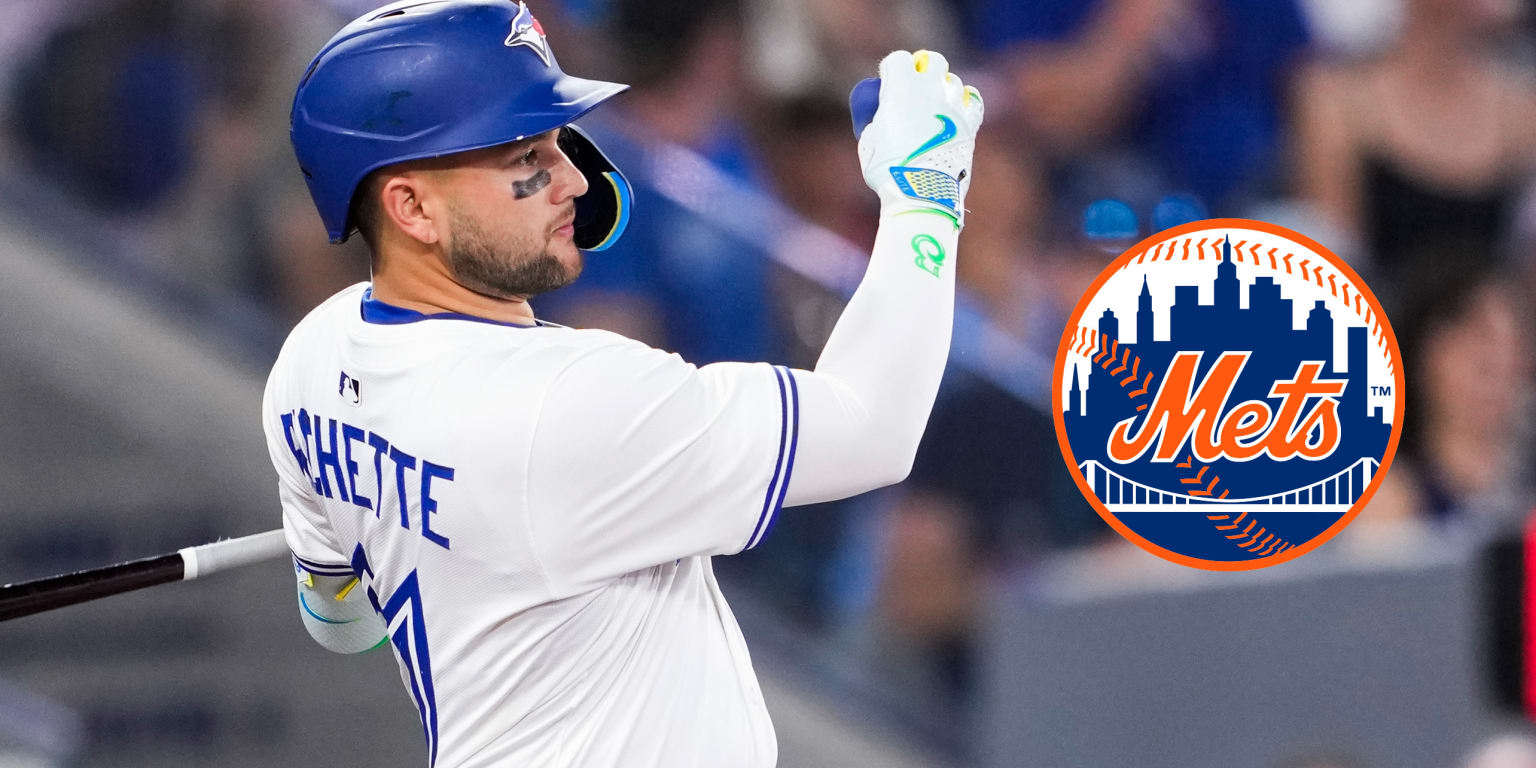
To understand why Bichette's $126 million deal is so remarkable, one must look back at his 2024 season—a year that nearly derailed his career. After establishing himself as one of baseball's most consistent hitters from 2021-2023, averaging 4.5 WAR per season and leading the American League in hits twice, Bichette suffered through a nightmare campaign. Calf injuries plagued him from June onward, and just one game into his second return from the injured list, he broke his finger, limiting him to just 81 games and a .225/.277/.322 slash line. "He never looked like his true self," wrote MLB.com's Keegan Matheson in February 2025, capturing the concern that surrounded Bichette entering his walk year.
But the son of former MLB slugger Dante Bichette proved his resilience in 2025, returning to the form that made him a two-time All-Star. In 139 games, he slashed .311/.357/.483 with 18 home runs and 94 RBIs, finishing second in the majors in batting average behind only Aaron Judge. His 181 hits were just four shy of leading all of baseball, and despite missing most of September with a knee injury, he returned for the World Series and batted .348 with a .923 OPS, including a crucial three-run homer off Shohei Ohtani in Game 7. "Bichette entered his walk year with one goal in mind: To prove he could still be an elite hitter after an injury-riddled 2024," noted Yahoo Sports. "He accomplished that goal."
Timeline: How Bichette Went from Blue Jays Cornerstone to Mets Prize
The road to Bichette's $126 million deal reads like a classic baseball redemption story. Drafted by the Blue Jays in the second round of the 2016 draft, Bichette made his MLB debut in 2019 and immediately impressed with 11 homers in just 46 games. From 2020-2023, he established himself as a franchise cornerstone, leading the AL in hits in 2021 and 2022 while forming a dynamic duo with Vladimir Guerrero Jr. But the 2024 season brought unexpected struggles, as injuries limited his effectiveness and raised questions about his long-term durability.
Spring training 2025 saw Bichette focused on redemption, telling reporters, "I'm just focused on what I've got to do this year to help the team win and be the best version of myself." His bounce-back performance propelled the Blue Jays from last place in the AL East to division champions, and his postseason heroics—despite playing through a knee injury—cemented his status as a clutch performer. When Toronto extended a $22.025 million qualifying offer after the season, Bichette declined, betting correctly that he could command far more on the open market. After meetings with the Phillies and other suitors, he found his match with the Mets, who needed offensive firepower after losing Pete Alonso, Brandon Nimmo, Edwin Díaz, and Jeff McNeil this offseason.
Why This Deal Makes Sense for Both Bichette and the Mets
For Bichette, the Mets' offer represents both security and flexibility. The $126 million guarantee is life-changing money, but the opt-outs after 2026 and 2027 give him the chance to cash in again if he continues to perform at an elite level. At just 27 years old (turning 28 in March), he's younger than most free agents of his caliber, meaning he could potentially sign another massive contract before turning 30. The full no-trade clause ensures he controls his destiny, while the lack of deferred money means he gets paid in real time—a significant consideration given the recent trend toward deferred compensation in mega-deals.
For the Mets, Bichette addresses a critical need for right-handed power and lineup protection for Juan Soto. With Alonso's departure creating a void in the middle of the order, Bichette projects to bat third behind Francisco Lindor and Soto, giving the Mets one of the most formidable top-thirds of any lineup in baseball. While his defense at shortstop has been below average in recent years, his move to third base—where he's expected to play despite never having played the position professionally—could mitigate those concerns. "Ultimately, the Mets pursued both Tucker and Bichette for their bats," wrote ESPN's Jorge Castillo, noting that offensive production was the priority over defensive fit.
Where Things Stand Now: Mets' Lineup Transformation and Blue Jays' Future
With Bichette's addition, the Mets' projected 2026 lineup looks dramatically different from just a year ago. Lindor will remain at shortstop, Soto in right field, and now Bichette at third base, with Jorge Polanco—another offseason acquisition—slotted to play first base for the first time in his career. This leaves incumbent third baseman Brett Baty in a utility role, though he could see time in the outfield or be used as trade bait to address other needs. The Mets' payroll now projects to exceed $345 million, well above the competitive balance tax threshold, costing them their second- and fifth-round draft picks as compensation for signing a player who rejected a qualifying offer.
For the Blue Jays, Bichette's departure marks the end of an era. The team had already locked up Guerrero with a 14-year, $500 million extension in April 2025, but couldn't reach a similar agreement with Bichette. Toronto will receive a compensatory draft pick after the fourth round in 2026, softens the blow of losing a homegrown star. The Blue Jays had been aggressive in free agency themselves, signing Dylan Cease to a $210 million deal earlier this offseason, but couldn't match the Mets' short-term, high-value offer for their former shortstop.
What Happens Next: Bichette's Integration and Potential Opt-Out Scenarios
The immediate next step is Bichette's physical, which must be passed before the deal becomes official. Assuming no issues arise, he'll report to spring training in February to begin learning third base—a transition that Mets coaches believe he can handle given his athleticism and work ethic. Manager Carlos Mendoza will need to decide where to slot him in the lineup, with the third spot behind Lindor and Soto seeming most logical given his ability to hit for average and drive in runs.
Looking further ahead, the opt-out clauses loom large. If Bichette performs as he did in 2025, he could become a free agent again next winter at age 28, potentially commanding an even larger contract. This scenario mirrors that of Alex Bregman, who opted out of a similar short-term deal with the Astros last offseason and signed for more money elsewhere. For the Mets, this represents both risk and opportunity: they get an elite hitter for at least one season, but may need to pay more to keep him beyond that. Given Cohen's willingness to spend and the team's desperate need for offensive production, it's a gamble they were willing to take.
The Bottom Line: Key Takeaways from Bichette's $126 Million Mets Deal
Bo Bichette's $126 million contract with the New York Mets represents one of the most compelling stories of the MLB offseason—a tale of redemption, calculated risk, and big-market ambition. From his disastrous 2024 season to his stellar 2025 comeback, Bichette has proven he can overcome adversity and perform at an elite level. The Mets, meanwhile, have shown they can pivot quickly after missing out on their top target, securing a player who could be a difference-maker in their quest to challenge the Phillies for NL East supremacy. While questions remain about Bichette's defense at third base and his injury history, there's no doubt that when healthy, he's one of the most dangerous hitters in baseball—and now he'll be showcasing those skills in Queens for at least the next season, and potentially for years to come.