
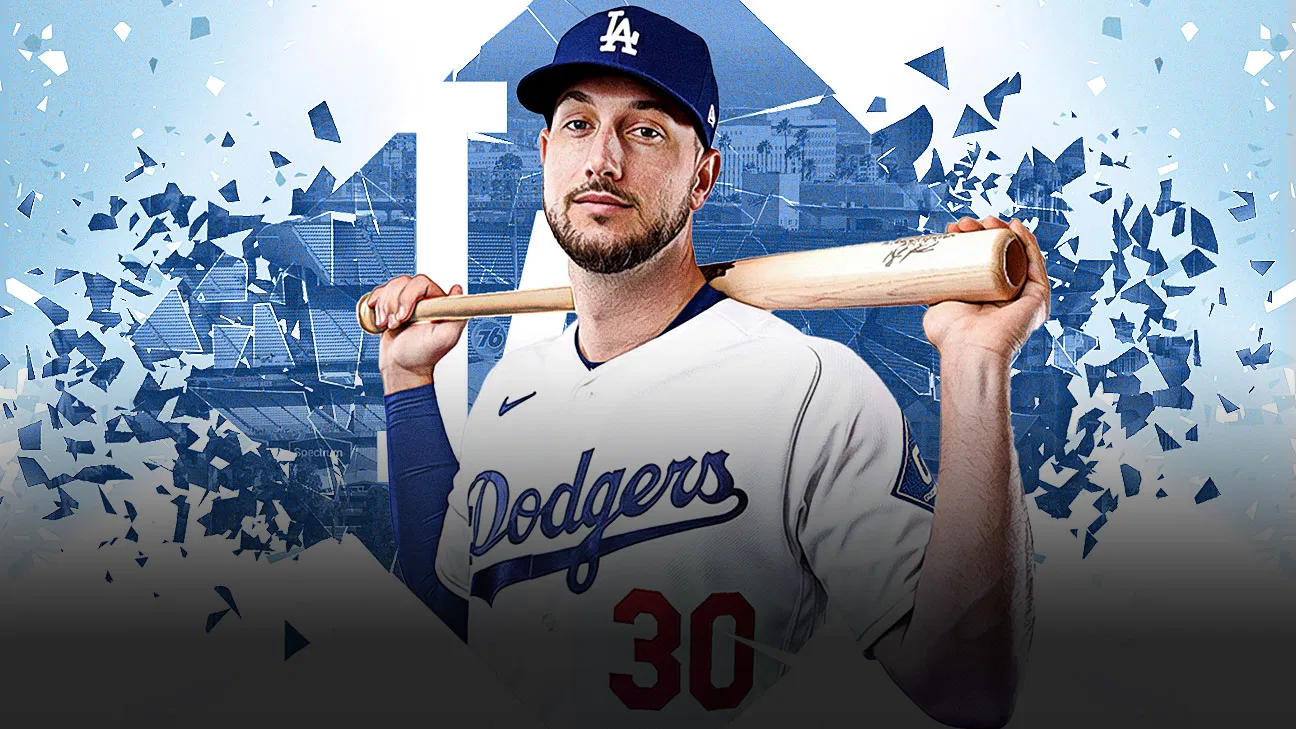
The Los Angeles Dodgers have once again flexed their financial muscle in pursuit of a historic three-peat, landing the crown jewel of the 2026 free agent class with a blockbuster four-year, $240 million deal for All-Star outfielder Kyle Tucker. The agreement, confirmed by multiple sources late Thursday night, gives the back-to-back World Series champions the consensus top available player this offseason and addresses one of their few remaining weaknesses as they prepare for another championship run. With opt-outs after the second and third seasons, $30 million in deferred money, and a $64 million signing bonus, Tucker's contract represents the latest example of the Dodgers' willingness to operate at the very peak of baseball's financial ecosystem.
How the Dodgers Landed Kyle Tucker: Inside the $240 Million Deal
When the offseason began, Kyle Tucker's free agency was expected to be a protracted affair with multiple teams vying for his services. The 29-year-old outfielder, coming off a season where he batted .266 with 22 home runs, 73 RBIs, and 25 stolen bases for the Chicago Cubs, was widely viewed as the most complete position player available. According to ESPN's Jeff Passan, the Dodgers initially appeared content to let the market develop, but when the New York Mets offered Tucker a four-year, $200 million deal and the Toronto Blue Jays presented a longer-term proposal, Los Angeles decided to act decisively.
The Dodgers' final offer – four years, $240 million with $30 million deferred and a $64 million signing bonus – shattered expectations. The deal includes opt-outs after both the second and third seasons, giving Tucker flexibility while providing the Dodgers with premium production during their current championship window. "The Dodgers hardly ever reward opt-outs under president of baseball operations Andrew Friedman," noted ESPN's Alden Gonzalez. "But they made a similar concession for Japanese starting pitcher Yoshinobu Yamamoto two offseasons ago and ultimately did the same for Tucker."
What makes the contract particularly notable is its present-day average annual value of $57.1 million, which surpasses Juan Soto's $51 million AAV with the Mets to become the highest in baseball history. When factoring in the Dodgers' luxury tax situation – they're already projected to exceed the highest competitive balance tax threshold – Tucker will effectively cost the team $119.9 million annually due to the 110% tax rate on overages.
Timeline: How Tucker's Free Agency Led to Dodgers
The path that brought Kyle Tucker to Los Angeles traces back to his trade from the Houston Astros to the Chicago Cubs in December 2024. After spending his first eight seasons with Houston, where he won a World Series in 2022 and earned three All-Star selections, Tucker played his final pre-free agency year in Chicago. Despite battling injuries – including a hairline fracture in his right ring finger in June and a calf strain in September – he still managed to produce an .841 OPS and earn his fourth consecutive All-Star nod.
As free agency opened in November 2025, Tucker rejected the Cubs' qualifying offer and entered the market as the undisputed top position player available. Initial industry speculation suggested he could command a contract approaching $400 million over ten years, but the market shifted toward shorter-term, high-AAV deals. According to Yahoo Sports' Jordan Shusterman, "The industry began buzzing about a different approach—shorter deals, massive annual value, and the chance for Tucker to re-enter free agency while still firmly in his prime."
By mid-January, the competition had narrowed to three teams: the Blue Jays, who offered the longest term; the Mets, who proposed the highest annual salary at $50 million per year; and the Dodgers, who had been quietly monitoring the situation. The turning point came on January 15, when Tucker posted an Instagram video featuring Dodger Stadium, a Dodgers jersey with his name, and the voice of Andrew Friedman saying, "the newest member of the Los Angeles Dodgers." Within hours, multiple sources confirmed the agreement.
Why Tucker's Signing Changes Everything for Dodgers' Three-Peat Bid
The addition of Kyle Tucker transforms what was already baseball's most formidable lineup into something approaching a fantasy roster. Tucker is expected to slot into right field, shifting Teoscar Hernández to left and keeping Andy Pages in center field. This configuration dramatically improves both the offensive and defensive capabilities of a Dodgers outfield that ranked 26th in on-base percentage (.299) and 18th in fWAR over the past two seasons.
"Over the past three seasons, Tucker's .380 on-base percentage ranks eighth among qualified hitters," noted Yahoo Sports, highlighting exactly what the Dodgers were seeking. His elite plate discipline – he walked 87 times against just 88 strikeouts in 2025 – provides a stark contrast to the free-swinging tendencies that sometimes plagued Los Angeles' outfielders. Defensively, while Tucker's range has declined in recent years, his arm strength remains above average, and he represents a significant upgrade over Hernández, who ranked among the worst defensive right fielders in baseball last season.
Perhaps more importantly, Tucker's left-handed bat balances a lineup that already features Shohei Ohtani, Freddie Freeman, and Max Muncy from the left side. His presence creates matchup nightmares for opposing managers and provides insurance against potential regression from older stars like Freeman (who turns 37 in September) and Muncy (36 in August). As MLB.com's Sonja Chen observed, "One of the game's most complete offensive threats, the outfielder combines elite plate discipline with strong contact skills and plus power, as well as enough baserunning savvy to make an impact with his legs, too."
Where Things Stand: Dodgers' Lineup After Tucker
With Tucker officially in the fold, the Dodgers' projected 2026 starting lineup looks like something out of a video game. According to MLB.com, the full-strength batting order would feature:
- DH: Shohei Ohtani
- SS: Mookie Betts
- 1B: Freddie Freeman
- C: Will Smith
- RF: Kyle Tucker
- LF: Teoscar Hernández
- 3B: Max Muncy
- CF: Andy Pages
- 2B: Tommy Edman
This lineup boasts seven players with multiple All-Star selections and represents what may be the most talented collection of hitters ever assembled on one team. The Dodgers also boast incredible depth, with players like Alex Call, Hyeseong Kim, Miguel Rojas, and recent addition Andy Ibáñez available off the bench. The rotation, led by Yoshinobu Yamamoto, Tyler Glasnow, and Roki Sasaki, combined with the bullpen anchored by Edwin Díaz (signed earlier this offseason to a three-year, $69 million deal), creates a roster with virtually no obvious weaknesses.
The financial commitment required to build this superteam is staggering. The Daily Breeze reported that the Dodgers' 2025 competitive balance tax payroll finished at $417.3 million, resulting in a record tax bill of $169.4 million. With Tucker and Díaz added, the 2026 CBT payroll is projected to exceed $400 million again, with the team likely to pay even higher penalties. However, as the article noted, "The Dodgers have also led MLB in attendance while winning the past two World Series and are believed to be the first MLB franchise to top $1 billion in revenue."
What Happens Next: Dodgers' Luxury Tax and Future Moves
The Dodgers' spending spree comes with significant consequences beyond just the financial outlay. Because both Tucker and Díaz rejected qualifying offers from their previous teams, Los Angeles will forfeit four draft picks: their second, third, fifth, and sixth highest selections in the 2026 draft. Additionally, they'll lose $1 million from their international bonus pool. These penalties reflect MLB's attempt to create competitive balance, but the Dodgers have clearly decided that the immediate payoff of championship contention outweighs the long-term cost.
Looking ahead, the opt-outs in Tucker's contract create interesting scenarios. If he performs at an MVP level over the next two seasons, he could potentially re-enter free agency at age 31 and command another massive contract. Conversely, if injuries or performance decline occur, the Dodgers would be committed to paying him $60 million annually in the final years of the deal. This structure represents a calculated risk for both parties, but one that aligns with the Dodgers' win-now philosophy.
The signing also has implications for the rest of the National League West. As NBC Los Angeles observed, "For the Dodgers, this signing isn't just about winning the offseason. It's about control—of the market, of the narrative, and of the championship window." With the San Diego Padres, San Francisco Giants, and Arizona Diamondbacks all making significant moves this offseason, the division remains competitive, but the Dodgers have sent a clear message that they intend to maintain their dominance.
Key Takeaways from the Blockbuster Signing
The Dodgers' acquisition of Kyle Tucker represents more than just another free agent signing—it's a statement about the organization's priorities, resources, and championship aspirations. As the team pursues a third consecutive World Series title (something no team has accomplished since the 1998-2000 New York Yankees), they've demonstrated a willingness to spend at unprecedented levels and absorb significant penalties to field the best possible roster.
Key facts to remember:
- Record-setting contract: Tucker's $57.1 million present-day AAV is the highest in MLB history, surpassing Juan Soto's previous mark.
- Strategic flexibility: The opt-outs after years two and three give both player and team options depending on performance and market conditions.
- Immediate impact: Tucker addresses the Dodgers' most glaring need—outfield production—while adding another elite bat to an already stacked lineup.
- Financial commitment: The Dodgers' projected $400+ million CBT payroll and associated tax payments demonstrate owner Mark Walter's commitment to reinvesting revenue into the roster.
- Historical context: This signing continues the Dodgers' pattern of landing the top available free agent, following Shohei Ohtani (2024), Yoshinobu Yamamoto (2024), and Edwin Díaz (2025).
As the baseball world processes yet another monumental move by the Dodgers, one thing is clear: Los Angeles isn't just trying to win another championship—they're attempting to build a dynasty that could dominate the sport for years to come. With Kyle Tucker now wearing Dodger blue, that goal seems more attainable than ever.