
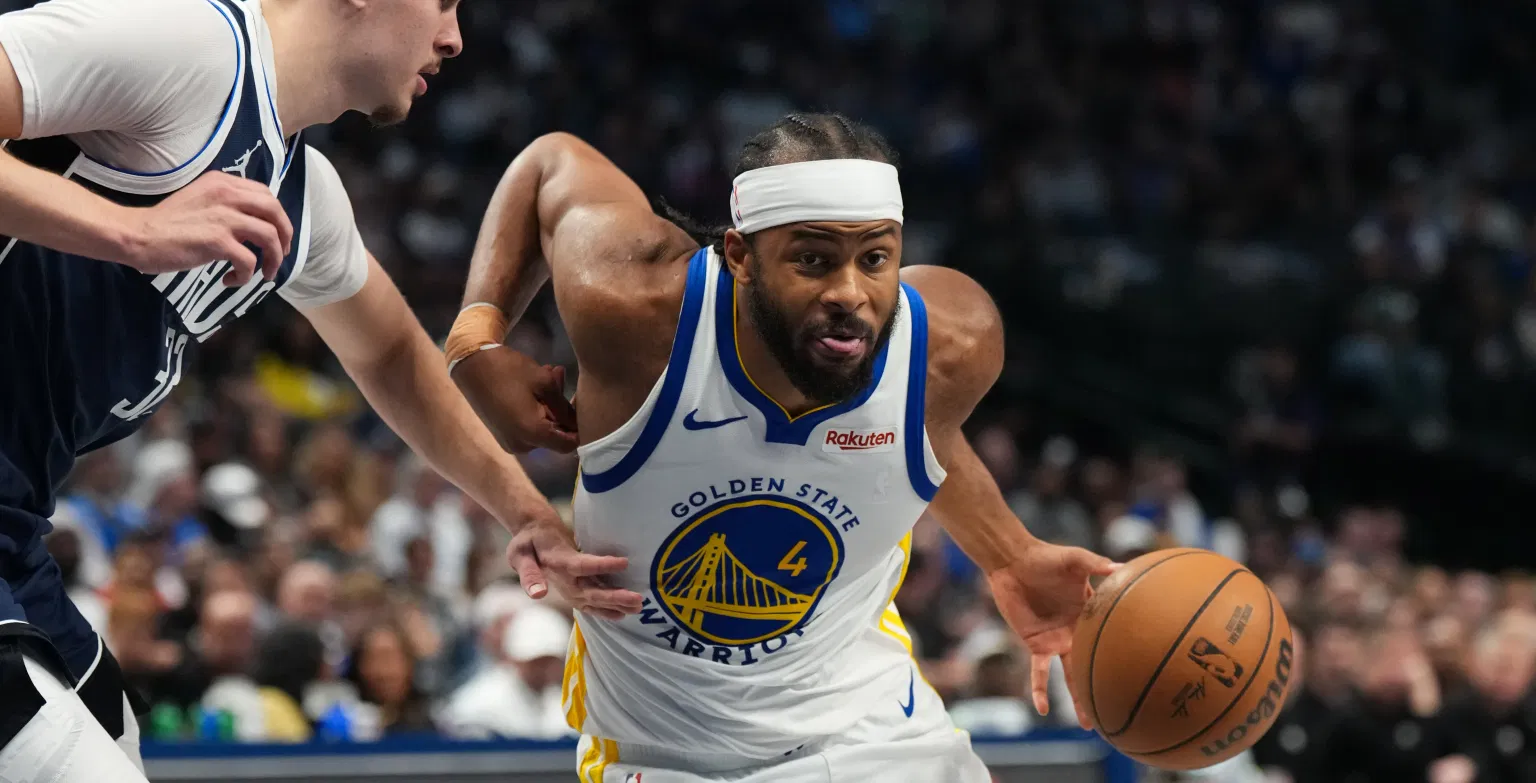
The Golden State Warriors' promising young guard Moses Moody suffered a devastating season-ending injury that has sent shockwaves through the NBA community. Moody tore the patellar tendon in his left knee during Monday night's overtime game against the Dallas Mavericks, an injury that will require surgery later this week and end his 2025-26 campaign. The MRI revealed a clean scan with no additional cartilage or bone damage, but the severity of the patellar tendon tear means Moody faces a lengthy recovery process that could extend into next season.
The Devastating Moment: How Moses Moody's Season Ended in Dallas
With just over a minute remaining in overtime and the Warriors clinging to a narrow lead, Moody found himself with a breakaway opportunity that should have been a routine dunk. As he planted his left leg to elevate toward the rim, his knee suddenly gave out, causing him to collapse under the basket in visible agony. Teammates and opponents immediately recognized the severity of the situation, with the entire arena falling silent as medical staff rushed to his aid.
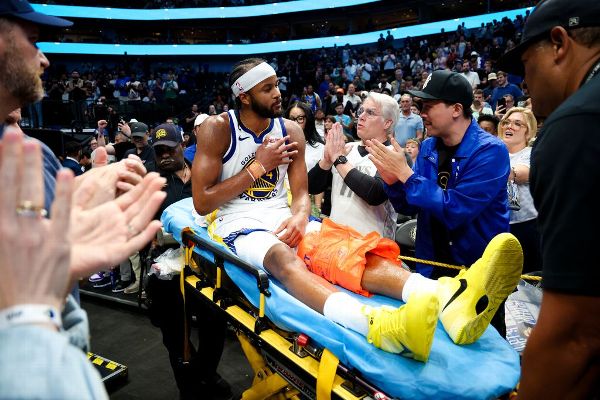
Eyewitness descriptions paint a grim picture of the injury scene. "As the cameras panned so fans could see Moody, it immediately became clear that something was horribly wrong with his knee, with a bone protruding at a gruesome and unnatural angle," reported Golden State Of Mind. The broadcast quickly cut away from the distressing scene, and when it returned, Moody was being fitted with an air brace before being stretchered off the court to applause from both teams and the Dallas crowd.
What makes the injury particularly cruel is the context: this was Moody's first game back after missing 10 consecutive contests with a right wrist sprain. He had been playing arguably the best basketball of his career before the wrist injury, and his return against Dallas showed no rust—he had already accumulated 23 points, 3 rebounds, 3 assists, 2 blocks, 3 steals, 4 deflections, and 2 loose balls recovered before the fateful play.
From Wrist to Knee: The Crushing Timeline of Moody's Injury
The sequence of events leading to Moody's season-ending injury represents a brutal twist of fate for the 23-year-old guard. Just weeks earlier, Moody had established himself as a crucial two-way contributor for the Warriors, showcasing the defensive versatility and offensive development that prompted Golden State to sign him to a three-year, $37.5 million contract extension last October.
His progress was interrupted on March 4 when he suffered a right wrist sprain that sidelined him for 10 games. During that absence, the Warriors struggled to maintain consistency in their rotation, highlighting Moody's growing importance to the team's success. His return against Dallas was supposed to provide a boost to Golden State's playoff push, and through most of the game, he delivered exactly that.
The injury occurred at the 1:02 mark of overtime, with the Warriors leading 133-131. Moody had just stolen the ball from Mavericks guard Luka Dončić and was racing ahead for what appeared to be an uncontested dunk that would have extended Golden State's lead. Instead, the non-contact injury left him writhing in pain under the basket, and the game was temporarily halted as medical staff attended to him.
By Tuesday morning, the Warriors announced the official diagnosis: a torn left patellar tendon. The team confirmed Moody would undergo surgery later in the week and miss the remainder of the season. While the MRI brought some positive news—showing no cartilage or bone damage—the patellar tendon tear represents one of the most serious knee injuries in basketball.
Why Patellar Tendon Injuries Are Among Basketball's Worst
Patellar tendon tears are particularly devastating for basketball players due to the crucial role this tendon plays in jumping, cutting, and explosive movements. The patellar tendon connects the kneecap to the shinbone and is essential for transmitting the quadriceps muscle force needed for athletic performance. When this tendon ruptures, it not only requires surgical repair but also demands an extensive rehabilitation process that challenges even the most dedicated athletes.
"The MRI was clean. It's the tendon. No damage to cartilage or bone, so that's the good news," Warriors coach Steve Kerr told 95.7 The Game. "That allows it to be a pretty basic surgery." Kerr's characterization of the procedure as "basic" refers to the absence of additional structural damage, but medical experts caution that "basic" doesn't mean simple or quick when it comes to recovery.
Orthopedic specialists note that patellar tendon repairs typically require 9-12 months before athletes can return to competition, with the early stages involving immobilization to allow the surgical repair to heal. The rehabilitation process then progresses through range-of-motion exercises, strengthening, and finally sport-specific training. Even after returning to play, athletes often require additional time to regain their pre-injury explosiveness and confidence in their repaired knee.
The timing is especially unfortunate given Moody's recent contract extension and his emerging role with the Warriors. At 23, he was positioned to take on greater responsibility as the Warriors transition toward their next era, particularly with Stephen Curry entering the latter stages of his career. Moody's two-way potential had made him one of the team's most valuable young assets, and his absence creates significant challenges for Golden State's rotation during a critical playoff push.
Warriors' Playoff Push Now Faces Major Challenge
With Moody sidelined for the remainder of the season, the Warriors must adjust their rotation during the most important stretch of their schedule. Golden State currently finds itself in the thick of the Western Conference play-in tournament race, and Moody's defensive versatility and energy had become increasingly valuable as the team navigated injuries to other key players.
The injury compounds an already challenging situation for the Warriors, who are also currently managing the absence of Stephen Curry due to his own injury concerns. Moody's ability to guard multiple positions, provide secondary scoring, and contribute in transition had made him a Swiss Army knife in Kerr's rotation—precisely the type of player teams rely on during playoff-style basketball.
Golden State now faces difficult decisions about how to replace Moody's production. Options include increased minutes for younger players like Brandin Podziemski and Gary Payton II, or potentially adjusting their lineup configurations to feature more small-ball units. However, none of these alternatives perfectly replicate what Moody brought to the court, particularly his combination of size, shooting, and defensive intensity.
From a financial perspective, the injury comes at a particularly inopportune time. Moody's three-year, $37.5 million extension begins next season, meaning the Warriors have significant investment in his long-term development. While the team has insurance coverage for player injuries, the psychological impact of a major knee injury can affect a player's development trajectory, even after physical recovery is complete.
The Long Road to Recovery: What's Ahead for Moody
Moody's immediate focus will shift to surgery and the initial stages of rehabilitation. The Warriors have indicated the procedure will take place later this week, after which Moody will begin the challenging process of rebuilding strength and mobility in his left knee. Medical timelines suggest he likely won't be cleared for basketball activities until late 2026 or early 2027, potentially affecting his availability for the start of next season.
Historically, players returning from patellar tendon repairs face an uphill battle to regain their pre-injury form. While some athletes like Tony Parker and Zach LaVine have successfully returned from similar injuries, the recovery process tests both physical and mental resilience. Moody will need to navigate not only the physical rehabilitation but also the psychological hurdle of trusting his repaired knee during explosive movements.
The Warriors' medical and performance staff will play a crucial role in Moody's recovery. Golden State has invested heavily in sports science and rehabilitation resources, which should provide Moody with every advantage during his comeback attempt. The organization's track record with injury management, particularly with star players like Curry and Klay Thompson returning from significant injuries, offers reason for optimism about Moody's long-term prospects.
Looking further ahead, Moody's development timeline may need adjustment. Before the injury, he appeared poised to take on a larger offensive role next season, potentially as a starter or sixth man. Now, the Warriors may need to exercise patience as he works his way back to full strength, possibly limiting his minutes initially to manage his workload and rebuild confidence in his knee.
Key Takeaways from Moody's Season-Ending Injury
The devastating injury to Moses Moody serves as a stark reminder of the fragility of professional sports careers and the unpredictable nature of athletic injuries. Several key points emerge from this situation:
First, the clean MRI results provide legitimate reason for optimism regarding Moody's surgical outcome and long-term prognosis. The absence of cartilage or bone damage means surgeons can focus specifically on repairing the tendon, potentially simplifying the procedure and improving the chances for complete recovery.
Second, Moody's performance before the injury demonstrated his significant growth as a player. His stat line against Dallas—23 points, 3 rebounds, 3 assists, 2 blocks, and 3 steals—illustrates the two-way impact he had developed, making his loss particularly painful for a Warriors team in need of versatile contributors.
Third, the timing highlights the cruel randomness of sports injuries. Moody had just returned from a 10-game absence, was playing exceptional basketball, and suffered a non-contact injury on what should have been a routine play. These realities underscore why teams invest so heavily in sports medicine and injury prevention programs.
Finally, Moody's situation represents both a challenge and an opportunity for the Warriors organization. While his absence creates immediate rotational problems, it also provides other young players with chances to develop. How Golden State navigates this adversity could reveal important information about their roster depth and resilience as they pursue playoff positioning in a competitive Western Conference.
As Moody begins his recovery journey, the basketball community will be watching closely, hoping for a successful return for one of the game's promising young talents. His work ethic and determination, traits that helped him develop into an NBA contributor, will now be tested in a different arena—the rehabilitation clinic—as he works to reclaim his place on the court.