
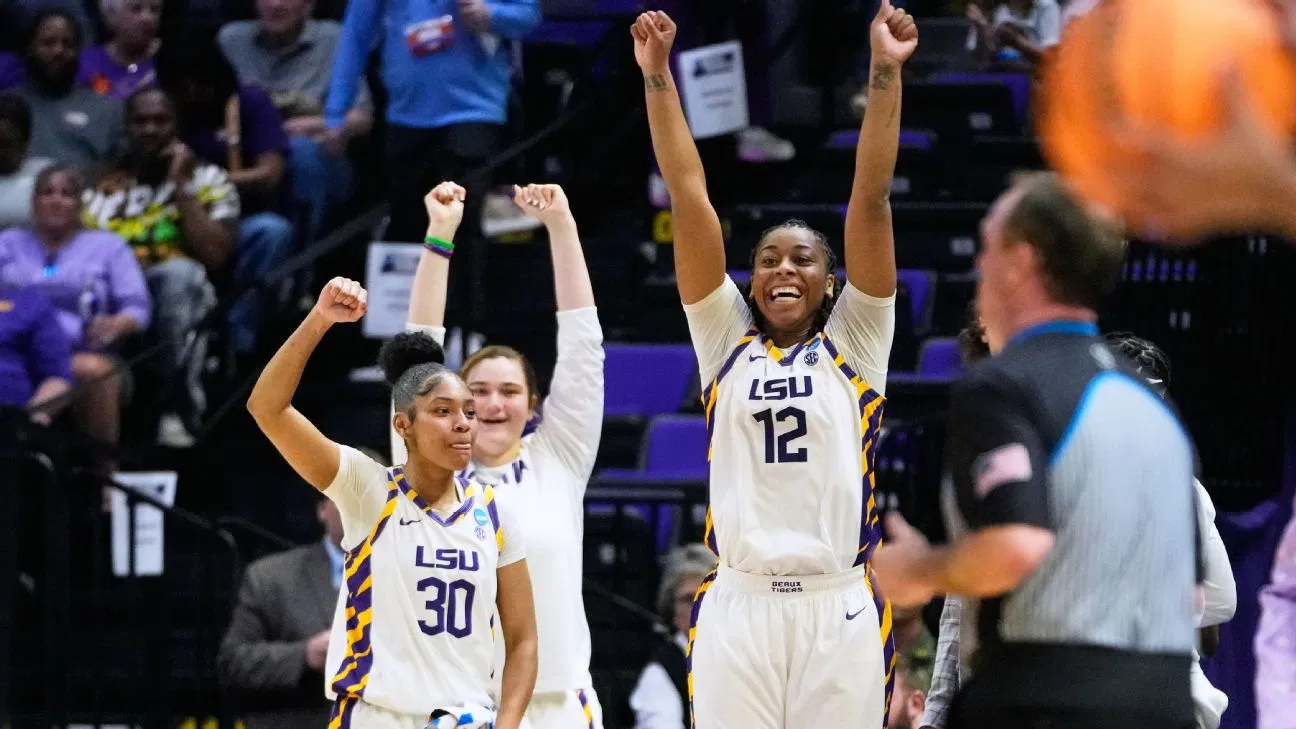
The 2026 NCAA women's basketball tournament opened with unprecedented predictability as all 16 higher seeds emerged victorious in Friday's first round action, setting the stage for what could be one of the most chalk-heavy March Madness events in recent memory. Defending champion UConn began its title defense with a dominant performance, while traditional power Tennessee suffered a historic early exit that sent shockwaves through the college basketball world.
Chalk Reigns Supreme: Higher Seeds Go Perfect in First Round
For the first time in modern tournament history, not a single lower seed managed to pull off an upset during the opening day of the women's NCAA tournament. The 16-game slate saw favorites advance across the board, with margins of victory ranging from comfortable double-digit wins to outright blowouts. Top overall seed UConn demonstrated why they entered the tournament as heavy favorites, showcasing the depth and talent that has made them the team to beat throughout the season.

"We came into this tournament with one goal – to repeat as champions," said UConn coach Geno Auriemma in post-game comments. "The first round is about taking care of business, and I was pleased with our focus and execution today." The Huskies' victory was part of a larger trend that saw No. 1 seeds Texas, UCLA, and South Carolina all advance with minimal resistance, combining to outscore their opponents by an average of 28 points.
From Selection Sunday to First Round: The Road to 16-0
The tournament's predictable opening act followed a selection process that largely validated the season-long hierarchy of women's college basketball. When the bracket was revealed on Selection Sunday, UConn earned the top overall seed after completing an undefeated regular season, joined by UCLA, Texas, and South Carolina as the other No. 1 seeds. The committee's decisions sparked minimal controversy, reflecting the clear separation between the nation's elite programs and the rest of the field.
The first round's lack of upsets continues a trend that has been developing in recent years, where parity in women's basketball has increased at the top but remains limited in the early rounds. Last year's tournament saw just three first-round upsets, and the 2024 edition featured only two. The perfect 16-0 record for higher seeds represents the logical conclusion of this trajectory, raising questions about whether the tournament format should be adjusted to create more competitive early-round matchups.
Why This Year's Tournament Could Be One of the Most Predictable
Several factors have converged to create what analysts are calling the "chalkiest" women's March Madness in recent memory. The continued concentration of elite talent at powerhouse programs, combined with the departure of generational stars like Caitlin Clark and Angel Reese to the WNBA, has created a talent gap that appears wider than in previous seasons. Additionally, the transfer portal has allowed top programs to reload quickly, while mid-major teams struggle to retain their best players.
"What we're seeing is the result of several years of talent consolidation," explained basketball analyst Debbie Antonelli. "The top programs have resources, exposure, and NIL opportunities that are simply unmatched. When you combine that with excellent coaching and development systems, it creates a competitive imbalance that shows up most dramatically in the first round."
The data supports this analysis: the average margin of victory in Friday's games was 18.7 points, with only three contests decided by single digits. The closest game saw No. 7 seed NC State defeat No. 10 Tennessee 76-61, a result that nonetheless represented a comfortable 15-point victory for the higher seed.
Tennessee's Historic Collapse: A Program at a Crossroads
While the day belonged to favorites, the most compelling story emerged from Ann Arbor, where Tennessee's season came to an abrupt and disappointing end. The Lady Vols' 76-61 loss to NC State marked their eighth consecutive defeat, the program's first 8-game losing streak to end a season in its storied history. The defeat also represented just the third first-round exit for Tennessee in 38 tournament appearances, a staggering statistic that underscores the program's traditional dominance.
"The players deserve better than what I gave them this season," said first-year Tennessee coach Kim Caldwell, who took responsibility for the team's late-season collapse. "We showed flashes of what we could be, but we never developed the consistency needed to compete at this level. This is on me." Caldwell's comments followed her earlier criticism of the team's effort during a record 93-50 loss to South Carolina in the SEC tournament, a game she said her team "quit" in.
The Tennessee program now faces significant questions about its direction. Once considered a perennial championship contender, the Lady Vols have failed to reach the Final Four since 2008 and haven't advanced past the Sweet Sixteen since 2016. The early tournament exit will likely intensify scrutiny on Caldwell's hiring and the administration's commitment to restoring the program to national prominence.
Second Round Matchups Set After Day of Dominance
With the first round complete, attention turns to Sunday's second-round matchups that promise more competitive contests. Several intriguing pairings emerged from Friday's results, including a showdown between No. 4 Oklahoma and No. 5 Maryland in the Albany 2 region, and a battle between No. 3 Duke and No. 6 Baylor in the Portland 4 region. These games represent the first true tests for many of the tournament favorites, as the quality of opposition increases significantly.
The most anticipated second-round matchup features No. 2 seed Iowa State against No. 7 seed Syracuse, a game that pits two of the nation's most efficient offenses against each other. Iowa State enters the contest having won 14 of its last 15 games, while Syracuse brings a potent scoring attack that averaged 82.3 points per game during the regular season. The winner will likely face top-seeded UConn in the Sweet Sixteen, setting up a potential early test for the tournament favorites.
Road to the Final Four: Key Battles Ahead
As the tournament progresses toward the regional rounds, several storylines will shape the path to the Final Four in Phoenix. UConn's quest for back-to-back championships faces its first major hurdle in the Albany 1 region, where potential matchups against either Iowa State or Syracuse await. The Huskies' depth will be tested against teams capable of exploiting any weaknesses, particularly if star players face foul trouble or shooting slumps.
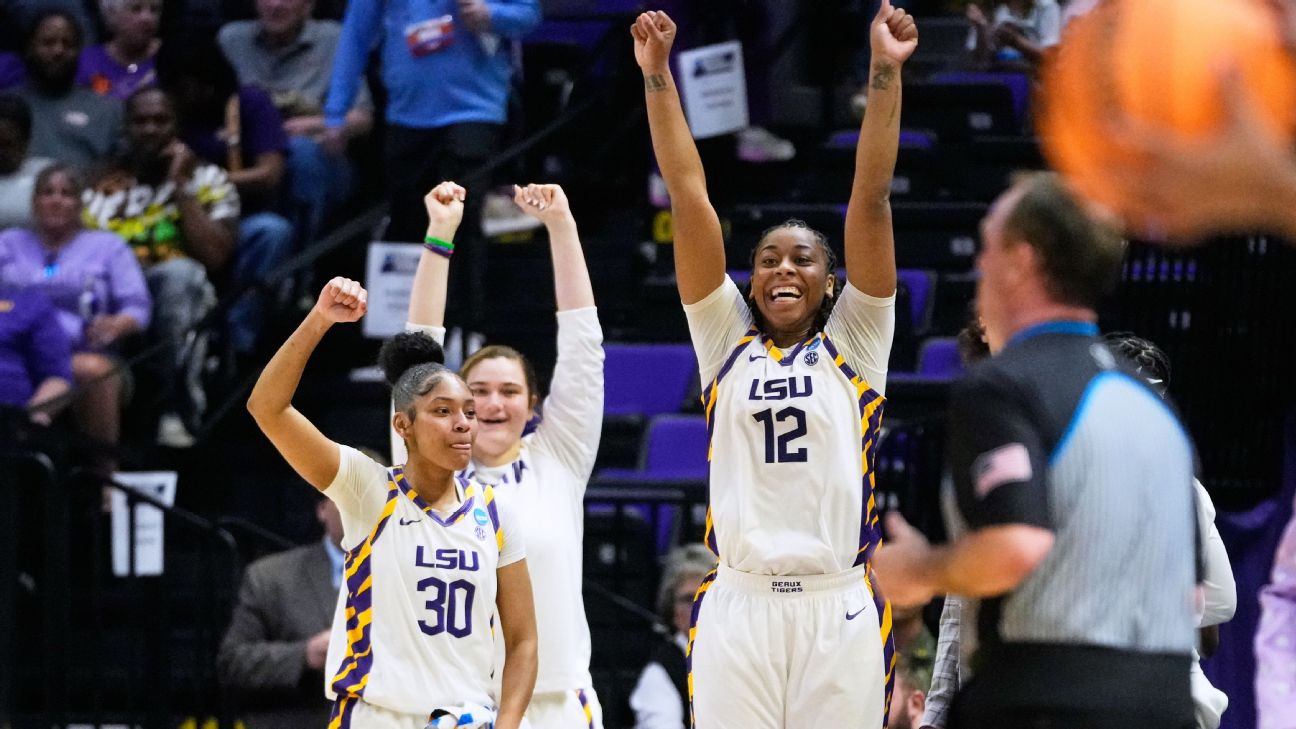
In the Portland 3 region, South Carolina looks to continue its dominant season against a bracket that includes dangerous opponents like No. 2 seed Stanford and No. 3 seed LSU. The Gamecocks have been nearly as impressive as UConn throughout the season, boasting the nation's top defense and a balanced offensive attack that features five players averaging double figures. Their path to the Final Four appears manageable but includes potential pitfalls against teams with elite guard play.
The Portland 4 region features perhaps the most intriguing collection of teams, with Texas, UCLA, and Oregon all capable of making deep runs. Texas brings exceptional athleticism and defensive intensity, while UCLA counters with one of the nation's most efficient offenses. The region's dark horse could be No. 4 seed Oregon, which finished the season strong and possesses the tournament experience needed to make a surprise run.
Key Takeaways from the Opening Day of Women's March Madness
The 2026 women's NCAA tournament opened with a historic display of favorite dominance, but several key observations emerged from the first round action:
- Depth matters: The teams that advanced most comfortably showcased superior bench production, a crucial factor as the tournament progresses and fatigue becomes a factor.
- Defense travels: Teams with elite defensive ratings performed particularly well, suggesting that defensive prowess may be even more valuable in tournament settings than during the regular season.
- Experience shows: Programs with recent tournament success generally handled the pressure better, while teams making rare appearances often looked overwhelmed by the moment.
- The gap remains: Despite efforts to promote parity, the talent and resource differential between top programs and the rest of Division I remains substantial, particularly in the tournament's opening rounds.
As the tournament moves into its second round, the question becomes whether the favorites can maintain their dominance or if the unpredictability that defines March Madness will finally emerge. With several compelling matchups on Sunday's schedule and the potential for dramatic storylines to develop, the 2026 women's NCAA tournament promises to deliver the excitement and drama that has made it one of the premier events in American sports.