
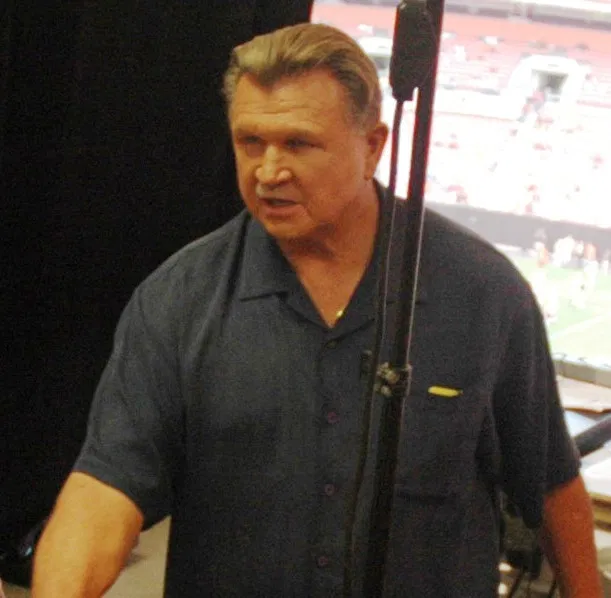
Mike Ditka, the Hall of Fame tight end who coached the 1985 Chicago Bears to their only Super Bowl championship, died Friday morning at the age of 86, his family announced. Ditka — known across football as “Iron Mike” and beloved in Chicago as “Da Coach” — died around 9 a.m. surrounded by family and friends after spending recent years in fragile health, according to a family spokesperson. He was, by any measure, one of the most important figures in the history of the franchise and the city he came to personify.
His family confirmed the news in a statement released Friday: “It is with profound sadness that we announce the passing of our beloved husband, father, grandfather, and friend, Mike Ditka. While the world may have known him for football, to us he was so much more.” No official cause of death was immediately announced, though Ditka had battled heart problems, a stroke, and a series of hip surgeries for decades.
Family Confirms the News: ‘To Us, He Was So Much More’
The family’s announcement on Friday capped years of public concern over Ditka’s health. He suffered a heart attack in 1988 while still coaching the Bears and later survived another, along with a minor stroke in 2012 and multiple hip-replacement surgeries. In November 2024, a report that Ditka had entered hospice care in Florida spread quickly; his family pushed back, telling the Chicago Sun-Times that he had returned to Chicago and was not in hospice.
Friends said Ditka had been in fragile health for some time, and the family said he died Friday morning “surrounded by family and friends.” While the family did not cite a specific cause of death, his decades-long history of cardiovascular issues and surgeries was widely noted in the tributes and obituaries that followed. That toughness in the face of health setbacks mirrored the resilience that defined his football life.
From Hall of Fame Tight End to Super Bowl Coach: A Legendary Career
Born October 18, 1939, in Carnegie, Pennsylvania, Ditka was a three-sport standout and an All-American at the University of Pittsburgh before the Chicago Bears selected him fifth overall in the 1961 NFL Draft — after the rival AFL’s Houston Oilers made him the first overall pick. As a rookie he delivered a season that helped reinvent the tight end position, piling up more than 1,000 receiving yards and 12 touchdowns on his way to NFL Rookie of the Year honors.
As a bruising, game-changing tight end, Ditka earned five Pro Bowl selections, helped the Bears win the 1963 NFL championship, and later won Super Bowl VI as a member of the Dallas Cowboys in 1972. He also played two seasons for the Philadelphia Eagles between those stops. He finished his playing career with 427 receptions for 5,812 yards and 43 touchdowns — numbers that made him the first tight end inducted into the Pro Football Hall of Fame in 1988.
After retiring as a player, Ditka returned to Chicago in 1982 as head coach. Over 11 seasons he compiled a 106-62 regular-season record and, in 1985, guided one of the most dominant teams in NFL history. The 1985 Bears went 15-1, led by Walter Payton on offense and Buddy Ryan’s ferocious “46 defense,” and capped the season with a 46-10 demolition of the New England Patriots in Super Bowl XX in New Orleans — a victory that remains the franchise’s only Super Bowl title. Ditka was named NFL Coach of the Year in 1985 and again in 1988, and later coached the New Orleans Saints from 1997 to 1999.
Why Mike Ditka Mattered: The Man Who Defined Chicago Football
Ditka’s significance went far beyond wins and losses. He is the only person to participate in both of the Bears’ last two league championships — as a player on the 1963 title team and as head coach of the 1985 champions. That singular achievement, combined with his fiery sideline persona, made him the living symbol of Chicago’s hard-nosed football identity.
To a generation of fans, Ditka was the mustachioed, gum-chewing figure roaming the Soldier Field sideline — the leader of a team that produced the “Super Bowl Shuffle” and turned the Monsters of the Midway into a cultural phenomenon. Even a late-career turn as a comic foil alongside Will Ferrell in the 2005 film “Kicking & Screaming” only reinforced his status as a beloved, larger-than-life figure whose fame transcended football. After coaching, he became a familiar television analyst, opened a famous Chicago steakhouse, and remained a beloved fixture of city life.
Tributes Pour In: Obama, the Bears, and the NFL Remember ‘Da Coach’
Tributes poured in Friday from across sports and beyond. Former President Barack Obama, who moved to Chicago in the summer of 1985, wrote: “When I got to Chicago in the summer of 1985, Mike Ditka and the Chicago Bears were king. Coach Ditka set the tone for a team...” The Chicago Bears said they were “deeply saddened by the passing of legendary Chicago Bears coach and player, Mike Ditka,” adding that he “helped define Chicago sports” and that Ditka “gave so much to so many.”
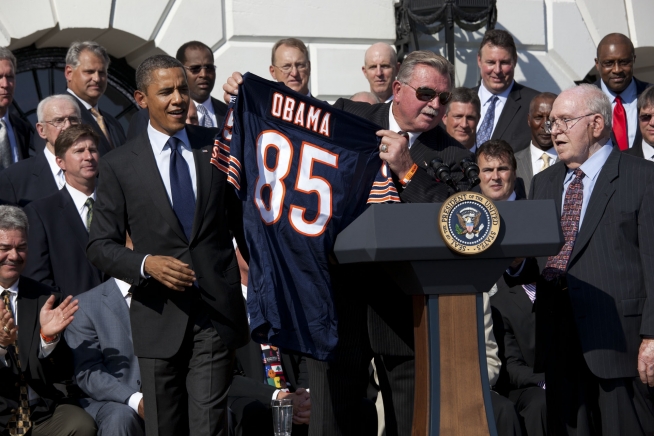
Detroit Lions head coach Dan Campbell was among the NFL figures who paid tribute, while fans gathered at Soldier Field and across the city to honor a man one fan summed up simply: “We’ll never forget him, ever.” From a Packers fan extending condolences to rivals, to emotional on-air tributes from Chicago broadcasters, the reaction underscored how deeply Ditka’s identity was woven into the fabric of the NFL.
What Happens Next: Honoring a Chicago Icon
Details of memorial arrangements were not immediately announced Friday. The Bears and city officials are expected to honor Ditka in the coming days, and his death arrives — as one broadcaster noted — “in the middle of Packer week,” a rivalry that defined much of his coaching tenure. His legacy is already cemented across Chicago: his name adorns a stretch of “Mike Ditka Way” near the city’s North Side, and his No. 89 jersey remains among the most recognizable in franchise history.
The Bottom Line: Mike Ditka’s Legacy in Numbers
- 86 — Ditka’s age at the time of his death on Friday, October 9, 2026
- 1963 — the year he won an NFL championship with the Bears as a player
- 1985 — the year he coached the Bears to a 15-1 record and the Super Bowl XX title
- 46-10 — the score of Super Bowl XX, the Bears’ only Super Bowl victory
- 5 — his Pro Bowl selections as a tight end
- 106-62 — his regular-season coaching record with the Bears
- 1988 — the year he was inducted into the Pro Football Hall of Fame