
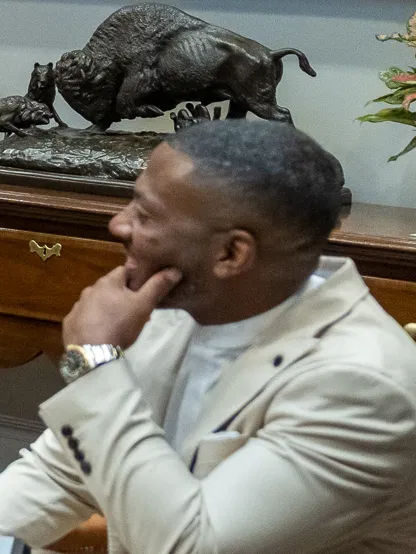
Ryan Clark, the former Pittsburgh Steelers safety who spent more than a decade as one of ESPN's most recognizable NFL voices, is reigniting his feud with the network — this time accusing ESPN of using a controversial Sophie Cunningham interview to distract from the way it ended his tenure.
Clark was fired on air in the middle of an NFL Live broadcast on July 20, 2026, just weeks before ESPN was set to carry its first Super Bowl. Now, months later, he says the network published a profile of Indiana Fever guard Sophie Cunningham — in which she spoke out against transgender athletes in women's sports — the very next day as a way to bury his abrupt exit and appeal to conservative outlets such as OutKick.
"That's what they wanted," Clark said on the All the Smoke podcast, arguing that ESPN hoped right-leaning media would read his firing and the Cunningham story as a sign of where the network was headed. The accusation is the latest escalation in a months-long public war between the Super Bowl XLIII champion and his former employer.
Clark's Explosive New Claim: The Timing Was No Accident
The timeline is what Clark keeps circling back to. He was let go on Monday, July 20, 2026, while hosting NFL Live. The following day, ESPN published its feature on Cunningham — billed as "Love her or hate her, Sophie Cunningham won't be ignored" — in which the 29-year-old guard stood by comments opposing transgender athletes competing in women's sports.
To Clark, that sequencing was deliberate. He has argued ESPN timed the release of the Cunningham interview to coincide with his firing so that a guaranteed cultural flashpoint would drown out coverage of his exit, which he says was handled "purposely" and designed to "humiliate" him.
He has also tied the move to ESPN's relationship with OutKick, the Fox Corp.-owned conservative sports outlet. Clark has repeatedly claimed ESPN leaked news of his firing to OutKick's Bobby Burack before it was announced internally — an accusation he first made in September on The Breakfast Club and reiterated this week. In Clark's telling, the Cunningham feature was the second half of the same play: hand conservative audiences a story they would celebrate.
From On-Air Firing to Public Feud: How It Unfolded
Clark's exit was as abrupt as it was public. On July 20, 2026, he was pulled from the NFL Live set mid-show — he later recalled asking, "Should I be done now?" — part of Disney's first major round of layoffs in three years, a restructuring tied to ESPN's April 2026 integration of NFL Network. Longtime baseball voice Karl Ravech and former NFL quarterback Cam Newton were among those also let go.
Clark, who reportedly earned around $2 million a year at ESPN, has insisted he was "fired," not "laid off." He told The Pivot podcast he broke down in tears processing the exit and said his boss called him mid-show to warn that OutKick was about to publish the news before ESPN's own announcement.
The Cunningham angle only added fuel. Her ESPN profile published July 21, and she doubled down the next day in Indianapolis, calling it "common sense" to keep transgender athletes out of women's sports. By late July, the story had drawn the White House's attention: Press Secretary Karoline Leavitt publicly backed Cunningham, and reports said President Donald Trump "feels strongly" about her comments. Rallies with "Thank you, Sophie" signs began appearing outside Fever games.
Why the Cunningham Interview Became a Flashpoint
Cunningham's comments were never subtle. The Missouri native, one of the WNBA's most popular and polarizing figures alongside Fever teammate Caitlin Clark, told ESPN she wanted to "protect women's sports" and young girls, while insisting she "extends love" and does not hate transgender people.
"I got a lot of negative feedback about me hating trans. And I'm like, 'I never once said that,'" she told ESPN. She later said she would "never falter" in her beliefs, adding: "I said what I said."
The backlash and support were immediate and intense, turning a reserve guard into the center of a national political debate. For Ryan Clark, however, the timing of the profile — one day after his firing — was the story. He has argued that ESPN, facing criticism over how it handled his exit, effectively handed the news cycle to a culture-war story it knew would dominate.
The Schrager Factor and Clark's Bigger Allegation
Clark's firing, though, did not happen in a vacuum. Reports at the time said ESPN executives had "soured" on him after a September 2025 on-air clash on Get Up with colleague Peter Schrager, during which Clark told Schrager there was a "non-player in you" while debating accountability for the Dallas Cowboys. Clark has disputed that the Schrager incident drove the decision.
Instead, he has framed his exit in starkly different terms. In a July appearance on The Pivot and again in September on The Breakfast Club, Clark said he spent years softening parts of his personality at the network and suggested he felt he "couldn't be too Black" to keep his job. The line became a headline of its own and drew broader commentary about race and sports media.
Where the Story Stands Now
As of early November 2026, neither ESPN nor Cunningham has publicly responded to Clark's latest accusation about the timing of the profile. Clark continues to lean into the feud on The Pivot and in media appearances, keeping his exit in the sports-news conversation nearly four months after he last appeared on ESPN.
Cunningham, for her part, has said she is "unconcerned" about being a distraction and has pushed to get the focus "back to basketball," even as the Fever's season plays out under a national microscope. The league's players' association has emphasized inclusion amid the debate.
What Happens Next
Clark has not said he plans legal action, and no evidence has surfaced showing ESPN coordinated the Cunningham profile with his firing. But his willingness to keep making the accusation ensures the story will resurface as long as he has a microphone.
For ESPN, the saga underscores the cost of a messy, public separation with a beloved on-air personality. For Cunningham, it means her basketball season remains tied to a political conversation she never fully escaped. Whether Clark offers more specifics — or ESPN finally responds — will likely determine how long this chapter stays open.
The Bottom Line: Key Facts to Remember
- Ryan Clark was fired by ESPN on air during NFL Live on July 20, 2026, amid Disney layoffs tied to the NFL Network merger.
- He now claims ESPN published a Sophie Cunningham profile on transgender athletes the next day to distract from his firing and impress conservative outlets.
- Clark has repeatedly said ESPN leaked his firing to OutKick to "humiliate" him and that he felt he "couldn't be too Black" at the network.
- Cunningham, an Indiana Fever guard, has stood by her "common sense" stance against trans athletes in women's sports, drawing White House attention.
- Neither ESPN nor Cunningham has responded to Clark's latest accusation.