

Lindsey Vonn’s quest for one final Olympic medal ended in a terrifying crash that silenced the Cortina d’Ampezzo downhill course on Sunday. The 41‑year‑old American ski legend, racing just nine days after completely rupturing the ACL in her left knee, lost control barely 13 seconds into her run, was thrown into the air, and landed in a heap of pain, forcing the 2026 Winter Olympics to witness one of its most gut‑wrenching moments. As medical personnel rushed to her side and the race was halted for more than ten minutes, the grim reality set in: Vonn’s improbable, courageous comeback was over, and she would be airlifted off the mountain by helicopter, leaving behind a sport that has revered her for two decades.
How the Crash Unfolded: Inside Vonn’s Fateful Run
Vonn pushed out of the start gate on the Olimpia delle Tofane course with the same aggressive, nothing‑to‑lose attitude that has defined her career. Wearing a heavy brace on her left knee—a knee she later revealed was “100% gone” after tearing her ACL in training nine days earlier—she charged into the opening traverse. Witnesses described her line as overly tight, causing her to clip a gate with her right ski near the first jump. That slight contact was enough to send her off‑balance in mid‑air. Vonn landed perpendicular to the slope, her body twisting violently before she tumbled down the hill, finally coming to a stop while clutching her left knee and screaming in anguish.
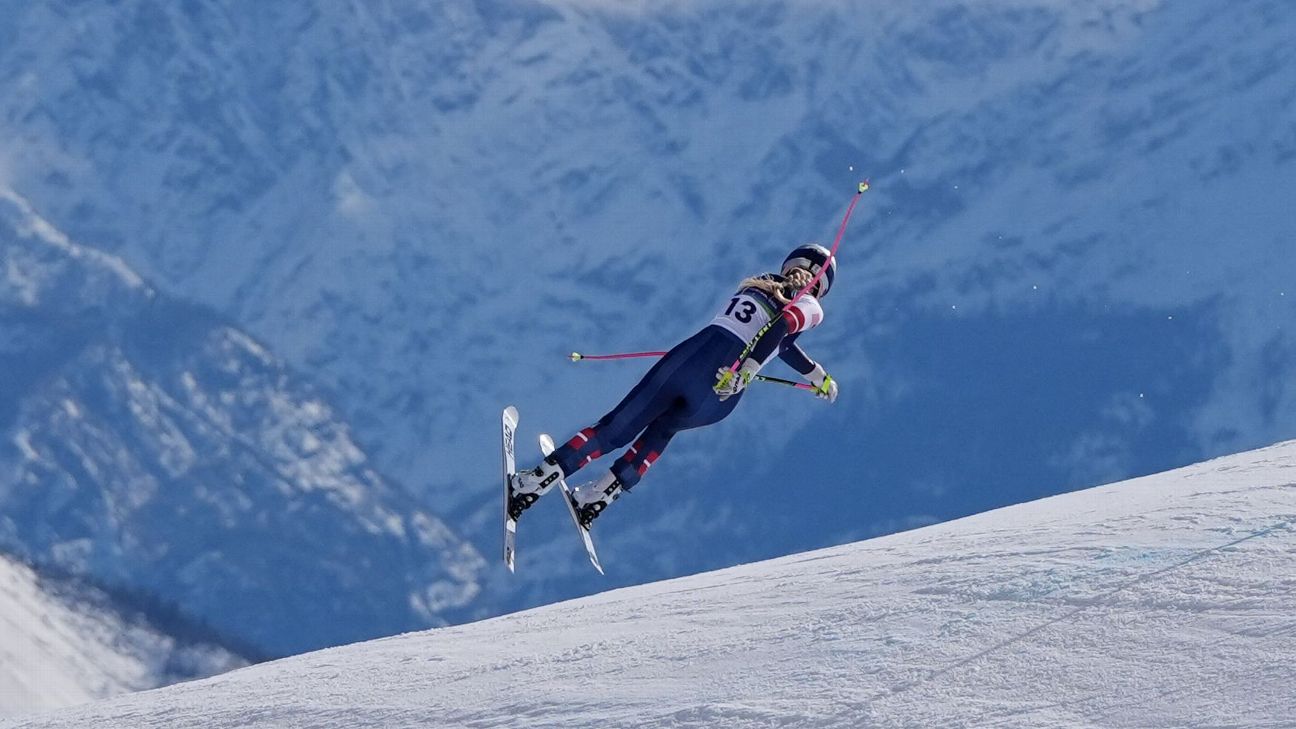
“It was a sickening sound,” said one course worker who was near the impact zone. “You could hear her cry out, and then everything just stopped.” Race officials immediately red‑flagged the event, and a team of doctors and ski patrol rushed to Vonn’s side. For several long minutes, she remained on the snow, receiving oxygen and preliminary assessment before being carefully strapped to a rescue sled. A helicopter that had been on standby for the downhill event landed on a nearby flat section, and Vonn was loaded aboard and flown to Codivilla Hospital in Cortina for further evaluation. The entire sequence—from crash to airlift—took approximately 15 minutes, leaving spectators, teammates, and rivals in a state of stunned silence.
Timeline: The Road to Cortina and the 13‑Second Crash
Vonn’s appearance in the Olympic downhill was the culmination of a whirlwind, pain‑filled week that few believed was possible. The timeline below outlines the critical events that led to Sunday’s dramatic crash:
- January 30, 2026: Vonn crashes during a training run in Cortina, suffering what is later diagnosed as a complete rupture of the anterior cruciate ligament in her left knee. She is airlifted from that crash as well, leading to widespread speculation that her Olympic bid is over.
- February 1‑6, 2026: Vonn undergoes intensive rehab and swelling management. Against medical advice, she insists she will attempt to race, telling reporters, “I didn’t come this far to quit now.”
- February 7, 2026: Vonn participates in a limited downhill training session, completing the course but visibly favoring her injured knee. Team USA officials list her as “game‑day decision.”
- February 8, 2026, 11:15 a.m. local time: Vonn is confirmed as a starter for the Olympic women’s downhill, drawing a mix of admiration and concern from the skiing world.
- February 8, 2026, 12:03 p.m.: Vonn launches from the start gate. Approximately 13.4 seconds later, she clips a gate on the first jump and crashes violently.
- February 8, 2026, 12:08 p.m.: Race is halted. Medical teams reach Vonn and begin treatment on the slope.
- February 8, 2026, 12:18 p.m.: Vonn is loaded into a rescue helicopter and flown to Codivilla Hospital.
- February 8, 2026, 12:45 p.m.: The downhill race resumes after a 42‑minute delay. Teammate Breezy Johnson goes on to win the gold medal.
Why Vonn’s Crash Matters: Expert Analysis and the Bigger Picture
Sports medicine specialists had warned that skiing a downhill course with a freshly torn ACL was not just risky but nearly impossible. The anterior cruciate ligament is crucial for stabilizing the knee during the violent, high‑speed turns of downhill skiing. “What Lindsey attempted was medically unprecedented,” said Dr. Robert LaPrade, a leading orthopedic surgeon who has treated many alpine skiers. “The forces on the knee in downhill can exceed 1,000 pounds of pressure. Without an ACL, the joint is essentially a loose hinge. The fact that she even made it to the start gate is a testament to her pain tolerance and mental fortitude.”
Beyond the physical gamble, Vonn’s crash underscores the unforgiving nature of alpine skiing at the Olympic level. At 41, she is the oldest female alpine skier ever to compete in the Winter Games. Her decision to race—despite the obvious danger—was driven by a desire to end her career on her own terms. “This wasn’t about winning a medal,” said former Olympic downhill champion Picabo Street. “This was about Lindsey writing the final chapter of her story, no matter how it ended. She has always been defined by her willingness to risk everything, and today she risked everything one last time.”
The crash also casts a spotlight on the broader issue of athlete safety and the pressure to compete through injury at the Olympics. While Vonn made the choice voluntarily, her very presence on the start list raised questions about whether the “win‑at‑all‑costs” culture of the Games sometimes overrides prudent medical judgment. “We have to ask ourselves if we’re creating an environment where athletes feel they must compete even when they’re physically compromised,” said sports psychologist Dr. Michael Gervais. “Lindsey’s courage is undeniable, but her crash should make us reflect on the messages we send to athletes about valorizing pain and injury.”
Where Things Stand Now: Latest on Vonn’s Condition and the Aftermath
As of Sunday evening in Cortina, Vonn remains under observation at Codivilla Hospital. Initial reports indicate no additional fractures or major ligament damage beyond the already‑known ACL rupture. She is said to be in stable condition but experiencing significant pain. Team USA officials have not released a formal prognosis, but it is widely expected that Vonn will undergo surgical reconstruction of her ACL in the coming weeks, effectively ending her competitive skiing career.

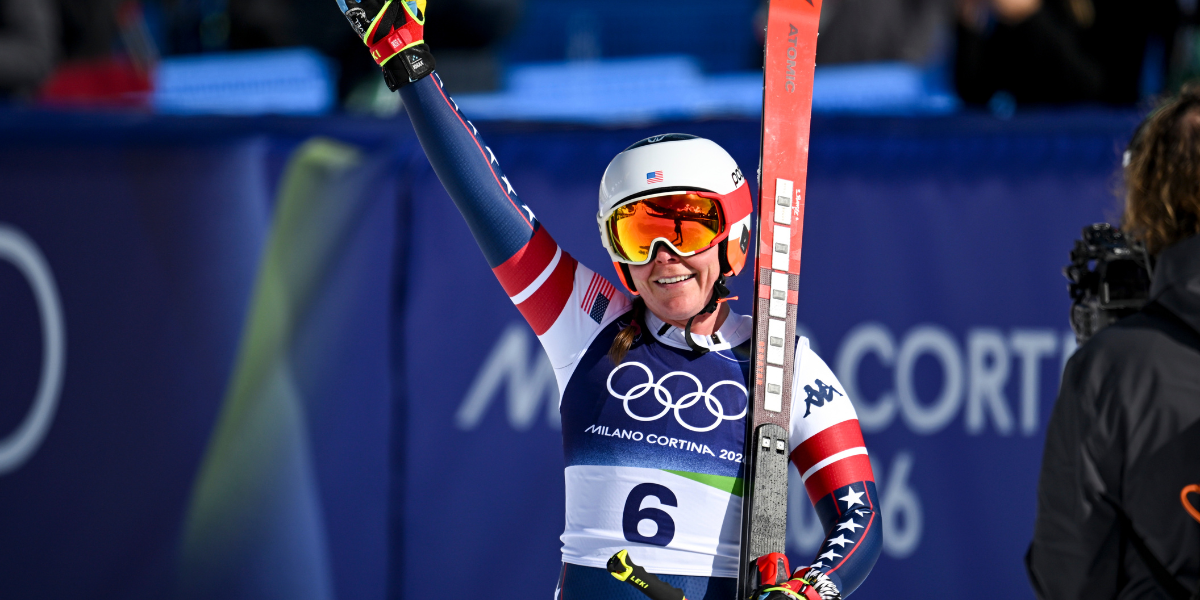
On the slope, the race resumed after the delay, and Breezy Johnson—Vonn’s teammate and close friend—channeled the emotional turmoil into a blistering, gold‑medal run. Johnson’s victory gave the United States its first gold of the Milan‑Cortina Games and added a bittersweet layer to an already‑charged day. “This gold is for Lindsey,” Johnson said through tears in the finish area. “She inspired me to keep going today. I just wish she could have been here with me on the podium.”
What Happens Next: The Road Ahead for Lindsey Vonn and Alpine Skiing
With her competitive career almost certainly over, Vonn will now turn her attention to recovery and the next chapter of her life. She is expected to remain a visible figure in the skiing world, likely transitioning to broadcasting, coaching, or advocacy work. Her legacy as the most successful female downhill skier of all time—with 82 World Cup wins, three Olympic medals, and two World Championship titles—is already secure. Sunday’s crash, however tragic, will be remembered as the raw, honest conclusion to a career that was always defined by extreme risk and relentless courage.
For the sport itself, the incident may prompt renewed discussions about safety protocols for athletes returning from major injuries during the Olympic period. The International Ski Federation (FIS) could consider implementing stricter medical clearance requirements for competitors who have suffered significant trauma in the weeks leading up to a race. At the same time, Vonn’s crash will undoubtedly become part of skiing’s lore—a reminder of the fine line between glory and catastrophe that every downhill racer walks.
The Bottom Line: Key Points to Remember
- Lindsey Vonn crashed approximately 13 seconds into the women’s downhill at the 2026 Winter Olympics in Cortina d’Ampezzo, Italy.
- She was airlifted off the mountain by helicopter and taken to a local hospital for evaluation.
- The crash occurred just nine days after Vonn completely ruptured the ACL in her left knee, an injury that made her participation highly controversial.
- At 41 years old, Vonn was the oldest female alpine skier in Olympic history, attempting a historic comeback in what was likely her final race.
- Teammate Breezy Johnson won the gold medal in the same event, dedicating her victory to Vonn.
- Vonn’s condition is stable, but she is expected to undergo surgery and retire from competitive skiing.
- The crash highlights the extreme risks of alpine skiing and the complex relationship between athlete courage, medical caution, and Olympic pressure.
Lindsey Vonn’s career ended as it was lived—at full speed, on the edge of control, and with the entire world watching. While the final image is one of pain and disappointment, the broader narrative is one of unparalleled resilience. In a sport that demands everything, Vonn gave everything, right up to her very last run.