
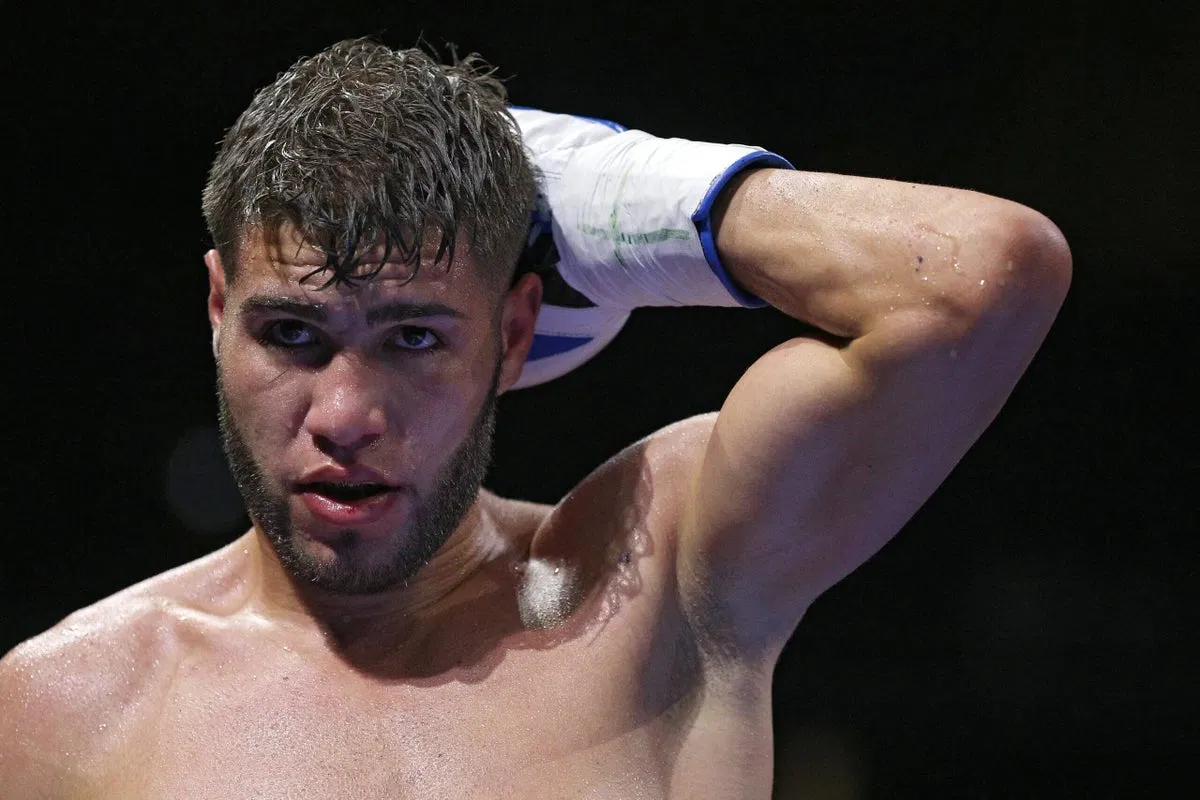
Former Puerto Rican professional boxer Prichard Colón, the undefeated super welterweight whose career and life were permanently altered by a 2015 bout in Virginia, died on Thursday, August 13, 2026, at age 33. His father and former trainer, Richard Colón, confirmed the death in a Facebook post, closing a nearly 11-year fight for survival that began when Colón collapsed after absorbing repeated illegal blows to the back of the head against Terrel Williams. He had spent the intervening years in a persistent vegetative state, unable to speak, receiving around-the-clock care at his mother's home in Orlando, Florida.
Colón's death triggered an outpouring of grief across combat sports and rekindled a long-running conversation about boxing safety, the dangers of illegal rabbit punches, and the chain of failures that allowed a 23-year-old fighter to leave the ring with an injury that never healed.
Inside the 2015 Fight That Changed Everything
Colón walked into the EagleBank Arena in Fairfax, Virginia, on October 17, 2015, carrying a flawless 16-0 record with 13 knockouts. The bout against Williams was a late addition to the card after Andre Dirrell withdrew from his scheduled fight for medical reasons. From the opening rounds, Colón repeatedly complained to referee Joseph Cooper that Williams was hitting him with rabbit punches — illegal strikes to the back of the head — but the complaints were waved off. According to multiple accounts, Cooper told him, "You take care of it."
The fight dragged into the ninth round, when Colón was knocked down for the first time in his professional career. Between rounds he told the ringside doctor he felt dizzy but believed he could continue, and he was cleared to go on. The bout ultimately ended in a disqualification after Colón's corner mistakenly removed his gloves, thinking the contest was over. That corner retirement became his final act as an active fighter. Minutes later, Colón was helped to the dressing room by his mother, where he vomited and collapsed.
At Inova Fairfax Hospital, doctors diagnosed a left-sided subdural hematoma measuring 1.5 centimeters with a midline shift, and performed an emergency hemicraniectomy to relieve the swelling in his brain. Colón spent 221 days in a coma. He never spoke again.
From Undefeated Prospect to a Decade of Care
Born on September 19, 1992, in Maitland, Florida, Colón moved to Puerto Rico at age 10 so he could compete for the island, settling in the rural town of Orocovis. Nicknamed "Digget," he built a decorated amateur career — five national titles and a gold medal at the 2010 Pan American Youth Championship in the 64-kilogram (141-pound) division — before compiling a 170-15 amateur record and turning professional in 2012.
As a professional he fought at a relentless pace, stepping into the ring five times in 2013 and seven times in 2014, and knocking out 13 of his first 16 opponents. His most notable victory came on September 9, 2015, when he stopped the veteran Vivian Harris in four rounds in Toronto — just over a month before the Williams fight ended his career. The WBC later named him an honorary world champion in recognition of his talent and the circumstances of his injury.
In the years that followed, Colón was treated at Inova Fairfax Hospital and the Shepherd Center in Atlanta before moving to his mother's home in Orlando, where he lived for the rest of his life. He remained in a persistent vegetative state, receiving physiotherapy and learning to communicate through a computer, though he never regained his speech. In July 2018, his mother posted a video showing him responding to verbal commands during therapy.
In 2017, his parents filed a lawsuit seeking more than $50 million in damages from ringside physician Dr. Richard Ashby and the organizers of the bout. As of 2025, the case had not been settled or brought to trial, and his mother said she feared it might never be resolved. Williams, for his part, declined to accept blame in a September 2017 interview, saying he prayed for Colón daily but would "never intentionally harm someone like that."
Why Colón's Story Still Looms Over Boxing
The circumstances of Colón's final fight became a cautionary tale in boxing, cited whenever the sport confronts its most dangerous realities. The rabbit punch — illegal in all major combat sports because of the catastrophic risk it poses to the brain stem and the base of the skull — was the central failure that night. Critics have long pointed to a chain of missed opportunities: a referee who dismissed a fighter's complaints, a ringside doctor who cleared a dizzy boxer to continue, and a corner whose confusion in the final moments compounded the chaos.
Colón's decade-long survival also turned his family into a symbol of the sport's hidden cost. His mother, Nieves Colón, became a constant presence in his care and a public voice for reform, documenting his slow, painstaking rehabilitation even as the lawsuit against the fight's medical staff and organizers stalled. For many fans, Colón's name became shorthand for boxing's inability to fully protect the people who step between the ropes.
His death does not close that conversation. If anything, it has renewed calls for stricter enforcement of fouls and more independent medical oversight at ringside, with advocates arguing that the failures of October 17, 2015, should never be allowed to repeat themselves.
The Boxing World Mourns
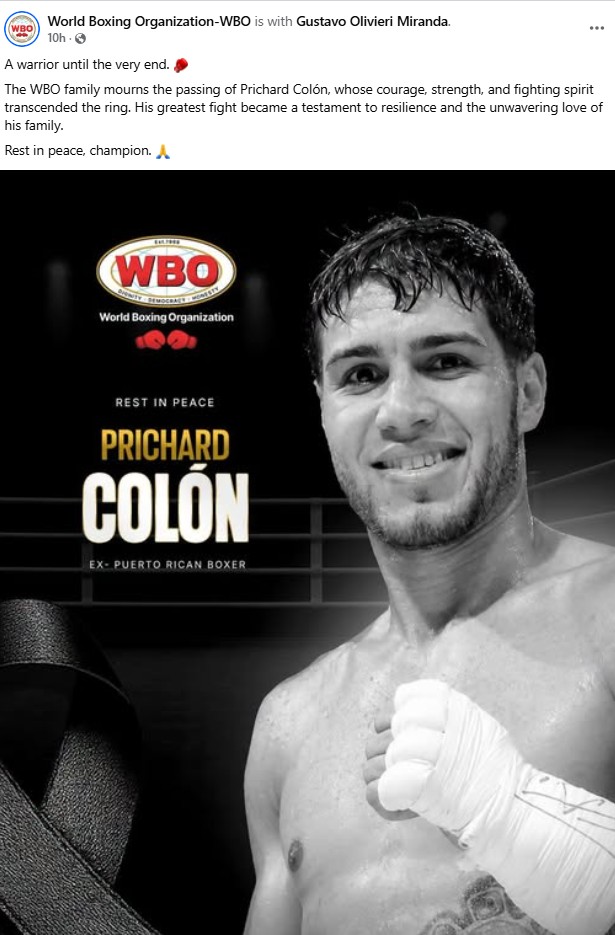
News of Colón's death triggered an outpouring of grief across the sport. "Prichard's life was defined by courage, perseverance, and an extraordinary fighting spirit," one boxing official said in remarks reported by Reuters. "His story transcended the ring and deeply touched the boxing community, which stood by him throughout the years with respect, admiration, and hope." The WBO paid tribute to Colón's resilience and to "the unwavering love of his family," while fans and fighters alike remembered a prospect whose promise was never fulfilled.
What Comes Next for Colón's Family and Legacy
Colón's family has spent more than a decade fighting for accountability, and that fight is expected to continue. The $50 million lawsuit remains unresolved, and it is unclear whether his death will alter its course. For a family that endured an unimaginable 11 years, the immediate focus now turns to honoring a son whose boxing dreams ended in a Virginia ring and whose story became a rallying point for reform.
As the boxing community processes the loss, Colón's legacy is likely to be remembered on two fronts: the dazzling undefeated prospect who once seemed destined for a world title, and the young man whose tragedy forced the sport to look squarely at its own dangers.
Remembering Prichard Colón: The Key Facts
- Died August 13, 2026, at age 33; his father Richard Colón confirmed the news on Facebook.
- Finished his professional career 16-0 with 13 knockouts before the October 17, 2015, fight against Terrel Williams.
- Suffered a left-sided subdural hematoma after repeated rabbit punches and spent 221 days in a coma.
- Remained in a persistent vegetative state for nearly 11 years, unable to speak.
- Was named an honorary WBC world champion and won gold at the 2010 Pan American Youth Championship.
- A 2017 lawsuit seeking more than $50 million from the ringside doctor and fight organizers remains unresolved.